

Blog
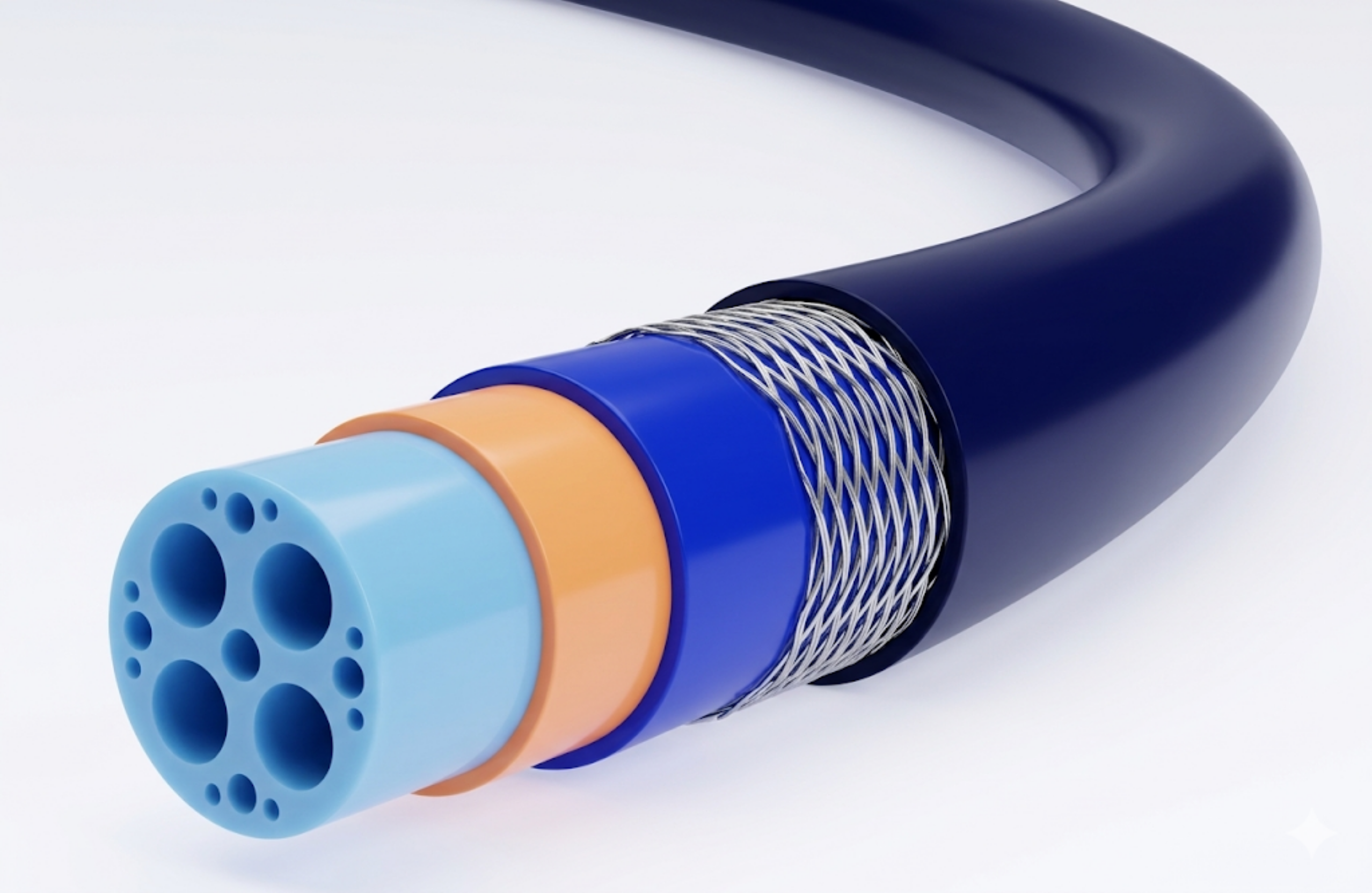
When an interventional catheter fails to track through a tortuous vessel, or a multi-lumen shaft kinks under clinical load, the root cause is rarely the final assembly. It’s almost always a decision made upstream: the wrong polymer, an undertolerance die, a lumen geometry that looked fine on paper but introduced wall imbalance at scale.
Catheter extrusion is where device performance is built. Understanding the decisions that shape it, and knowing what to look for in a manufacturing partner, is how engineering teams reduce risk before validation even begins.
This guide covers the material, process, and supplier-selection fundamentals that matter most for neurovascular, peripheral vascular, and interventional catheter programs.
Material Selection: Matching Polymer to Performance
Material choice is one of the highest-leverage decisions in catheter design. The right polymer enables the flexibility, stiffness, lubricity, and bonding behavior your device requires. The wrong one creates manufacturing problems that don’t surface until you’re mid-transfer.
Each material has a performance profile and a processing profile. Both matter.
| Material | Key Strengths | Watch Out For | Common Uses |
|---|---|---|---|
| Pebax (PEBA) | Flexibility across a wide durometer range (Shore D 25-74), kink resistance, bondability | Requires precise temperature control; durometer transitions need careful tooling | Neurovascular and interventional catheter shafts, multi-durometer constructions |
| Polyurethane (TPU) | Flexibility, kink resistance, abrasion resistance | Shear-sensitive; excessive RPM during extrusion degrades material properties | Balloon catheters, flexible outer jackets, fluid delivery shafts |
| Nylon (PA11/PA12) | Torque response, structural stiffness, burst strength | Low moisture absorbance; good heat resistance, excellent flexibility, high toughness, impact resistance, good wear and abrasion resistance | Diagnostic catheters, high-pressure contrast tubing, stiffer proximal shaft sections, balloons |
| Liners: PTFE, Kynar | Exceptional lubricity, chemical resistance, low friction | Cannot be melt-extruded conventionally; typically used as a liner or inner layer, not a stand-alone shaft material | Hydrophilic liners, guidewire lubricity layers, multi-material constructions |
With multi-material as the norm, early design conversations with your partner are essential.
Single-polymer catheter shafts are increasingly rare in advanced interventional applications. Most high-performance designs layer materials: a PTFE inner liner for lubricity, a Pebax or nylon mid-layer for structural support, and a softer outer jacket for tissue compatibility and bonding. Co-extrusion and jacketing processes enable these constructions, but they require a manufacturer with tight control over layer adhesion, material compatibility, and processing windows across polymers simultaneously.
The practical implication: material selection conversations with your extrusion partner should happen at the design stage, not after the spec sheet is locked.
Why Multi-Lumen Extrusion Becomes Challenging Fast
Adding lumens to a catheter isn’t a linear increase in complexity. Each additional lumen requires its own melt flow channel, its own tooling geometry, and its own balancing act to keep wall thickness and concentricity consistent across the full cross-section.
The engineering implications, in order of impact
- Tooling complexity scales nonlinearly. A 3-lumen die is not three times harder than a single-lumen die. The interaction between channels, pressure differentials, and polymer flow behavior multiplies the number of variables that must be controlled simultaneously.
- Lumen shape expands design options but tightens manufacturing demands. Round lumens are the most forgiving. Oval, D-shape, crescent, and slot geometries enable specialized functions like guidewire access or aspiration channels, but each introduces additional concentricity and wall uniformity challenges.
- Smaller profiles leave less room for error. Neurovascular and peripheral vascular catheters often operate in the 3-8 French range. At those diameters, a wall variation that would be acceptable in a larger catheter can compromise lumen patency, burst performance, or bonding compatibility.
- Real-time monitoring is not optional. Lumen geometry should be verified inline during extrusion, not just sampled post-run. Verified dies and continuous dimensional monitoring are what separate production-capable programs from prototype-only operations.
Common multi-lumen defects to screen for in supplier qualification: Lumen collapse, wall non-uniformity, ovality, lumen imbalance, crosstalk between lumens as septum walls thin out, and concentricity drift. Ask any prospective partner how they detect and respond to each of these during a production run, not just how they prevent them in theory.
Lumen count should be driven by functional need. Fit, form, function… it’s critical to understand and master it. Learning this key consideration will save you more in upfront costs and make your product easier to transfer from prototype to production.
Fluid delivery, guidewire access, aspiration, contrast injection, and pressure monitoring each justify a dedicated lumen. Adding lumens beyond functional requirements increases manufacturing risk without clinical return.
Critical Tolerances: The Specs That Separate Prototype Success from Production Reliability
Dimensional tolerance is where catheter extrusion programs succeed or fail at scale. A supplier can hold a tight spec on a development run with a skilled operator watching every meter. The question is whether that same spec holds across 10,000 feet of production tubing with normal process variation.
The four dimensions that matter most
| Dimension | Why It Matters | Industry Benchmark |
|---|---|---|
| Outer Diameter (OD) | Affects fit in delivery systems, hemostasis valve compatibility, and French size compliance | Tolerances to ±0.0005 inch in precision catheter extrusion |
| Inner Diameter (ID) | Governs guidewire clearance, fluid flow rate, and aspiration performance | ±0.02 mm in validated processes |
| Wall Thickness | Drives burst pressure, flexibility, and kink resistance; non-uniform walls create stress concentrations | Wall thicknesses from 0.001 inch in high-precision programs |
| Concentricity | Uneven wall distribution causes asymmetric flexibility and bonding failures downstream | Measured as % wall variation; tighter is critical for small-diameter interventional tubing |
What to ask beyond the spec sheet
Most suppliers will quote a tolerance. Fewer can demonstrate how they sustain it. The questions that expose real capability:
- What measurement systems do you use for inline dimensional monitoring?
- What is your process capability index (Cpk) target, and what do your production records show?
- How do you handle worst-case material lot variation in your process validation?
Industry guidance points to a Cpk of 1.0-1.33 or higher as the minimum for a validated medical extrusion process. That means 99.994% of product within spec, and it requires documented process controls, not just capable equipment.
Tight tolerances on paper are a starting point. Sustained Cpk across production lots is the real proof of capability.
Secondary Processing and Advanced Constructions: Where Catheter Performance Is Really Built
Extrusion produces the tubing. Secondary processing turns that tubing into a catheter that can navigate anatomy, deliver therapy, and survive clinical use. These two stages are inseparable in high-performance interventional design, and they should be planned together.
Secondary processes that affect extrusion decisions
- Tip forming – Soft distal tips require specific polymer compatibility and wall geometry at the distal end. Material choice and taper profile must be specified at the extrusion stage to enable clean tip forming downstream.
- Braiding and coil reinforcement – Braid- and coil-reinforced shafts require precision core mandrels with tight OD tolerances and consistent roundness to maintain uniform reinforcement coverage during the winding process.
- Marker band integration – Radiopaque marker bands require a landing zone with consistent wall thickness and outer diameter. Dimensional variation at the extrusion stage translates directly to marker placement inconsistency.
- Bonding and reflow – Jacket-to-shaft and shaft-to-hub bonds depend on material compatibility and surface condition of the extruded tubing. A supplier that understands bonding chemistry can flag incompatibilities before they become assembly failures.
- Co-extrusion and variable durometer shafts – Graded-stiffness shafts, where the proximal section is stiffer and the distal section more flexible, can require multiple durometers to be positioned in segments throughout the shaft. With the landscape of the industry evolving, especially with laser-cut back bones, the transitions are often required to be less than 1cm, and that becomes crucial for understanding your polymer selection, stack up tolerances, and functionality requirements.
Why integrated capability matters
A supplier that handles extrusion and secondary processing under one roof reduces handoff risk, shortens development cycles, and gives your engineering team a single point of accountability for how the full shaft performs. At Aptyx, our interventional systems capabilities span extrusion through cleanroom assembly, with in-house tooling design supporting both stages.
Regulatory Readiness: What ISO 13485 Should Mean in Practice
ISO 13485 certification is a necessary baseline for any catheter extrusion contract manufacturer. It’s not sufficient on its own. The standard tells you a quality management system exists. It doesn’t tell you how well that system is embedded in day-to-day extrusion operations.
Here’s what to look past, and what to look for instead:
| The Claim | What It Actually Means | What to Verify |
|---|---|---|
| “We’re ISO 13485 certified” | A QMS exists and passed an audit | Ask when the last surveillance audit was and whether any nonconformances were issued |
| “We have cleanroom facilities” | A controlled environment is available | ISO 13485 Clause 6.4 requires you to define cleanroom class based on product risk, not a universal standard. Ask which class, and why. |
| “We do full validation” | IQ/OQ/PQ protocols exist | Ask to see the PQ scope. Did it include worst-case material lots? A PQ run only on ideal resin doesn’t capture real production risk. |
| “We have full traceability” | Lot records are maintained | Ask how they handle material deviations and what triggers a CAPA. Traceability without change control discipline is incomplete. |
What a mature quality system looks like in extrusion
Strong regulatory readiness in catheter extrusion manufacturing means documented environmental controls, material traceability from resin lot to finished tubing, SPC data on critical dimensions, and a CAPA system that’s actually used when process drift is detected.
It also means the quality team is involved in program transfers and scale-up planning, not just final inspection. That’s the difference between a supplier that passes audits and one that de-risks your program.
How to Choose a Catheter Extrusion Manufacturing Partner: 12 Questions That Expose Real Capability
Most catheter extrusion suppliers can say yes to almost any question you ask. The goal isn’t to get a yes. It’s to understand how they’d answer, and whether their answer reveals depth or just confidence.
Use these questions in your next supplier conversation:
Materials and process knowledge
- Which polymers do you process most frequently for interventional catheter applications, and what are the processing sensitivities we should plan around?
- Have you worked with multi-material constructions (e.g., PTFE liner with Pebax jacket or multi-segmented constructions to allow for flexibility at certain lengths of the shaft)? Can you walk us through a program where that was required?
- How do you handle moisture-sensitive materials like nylon during production? What’s your drying protocol and how is it documented?
Tooling and die design
4. Do you design and build tooling in-house, or do you rely on outside tool makers? How does that affect lead time and iteration speed during development?
5. For our lumen count and geometry, what tooling approach would you recommend and why? And how does the material draw down impact this?
Tolerance and measurement
6. What inline measurement systems do you use during extrusion? How frequently are dimensions sampled and recorded?
7. What Cpk targets do you hold for OD, ID, and wall thickness in a validated process? Can you share representative process data?
Defect prevention and process control
8. What are the most common defects in multi-lumen extrusion, and how do your process controls specifically address each one?
9. How do you handle a dimensional drift event during a production run?
Validation and regulatory
10. Walk us through your IQ/OQ/PQ process for a new catheter extrusion program. Did your last PQ include worst-case material lots?
11. What does your CAPA process look like when a process deviation is detected, and how quickly can you respond?
Scale-up and integration
12. Can you support both rapid-turn development builds and full-scale production under the same quality system, and what does that transition look like?
At Aptyx, our Precision Extrusion Center of Excellence was built specifically to answer these questions with demonstrated capability: ID/OD tolerances to ±0.0005 inch, in-house tooling design, controlled environments, and a quality system that spans development through commercialization. If your program involves complex lumen geometry, tight tolerances, or a demanding timeline, talk to our engineering team before your spec is locked.
The Takeaway
Catheter extrusion decisions made early in development have a long reach. Material choice, lumen architecture, tolerance control, and secondary processing integration all shape device performance, validation complexity, and time to market.
- Choose your polymer based on both performance requirements and manufacturing tradeoffs
- Design lumen count and geometry around functional need, not feature ambition
- Evaluate suppliers on process discipline and sustained capability, not quoted specs alone
- Bring your extrusion partner in early, before the spec is locked
If you’re building a neurovascular, peripheral vascular, or interventional catheter program and want to pressure-test your design for manufacturability, start the conversation with Aptyx engineering.