
Case Studies
A surgeon’s napkin sketch becomes an FDA-approved aortic device
Customer Situation
A fellowship-trained cardiovascular and endovascular surgeon, subspecializing in aortic surgery, spent years treating patients with acute aortic dissection, a life-threatening emergency in which the layers of the aorta separate. He saw the limits of the standard surgical repair, which addresses the initial tear but requires substantial skill while creating patient risk, and believed a better solution was possible.
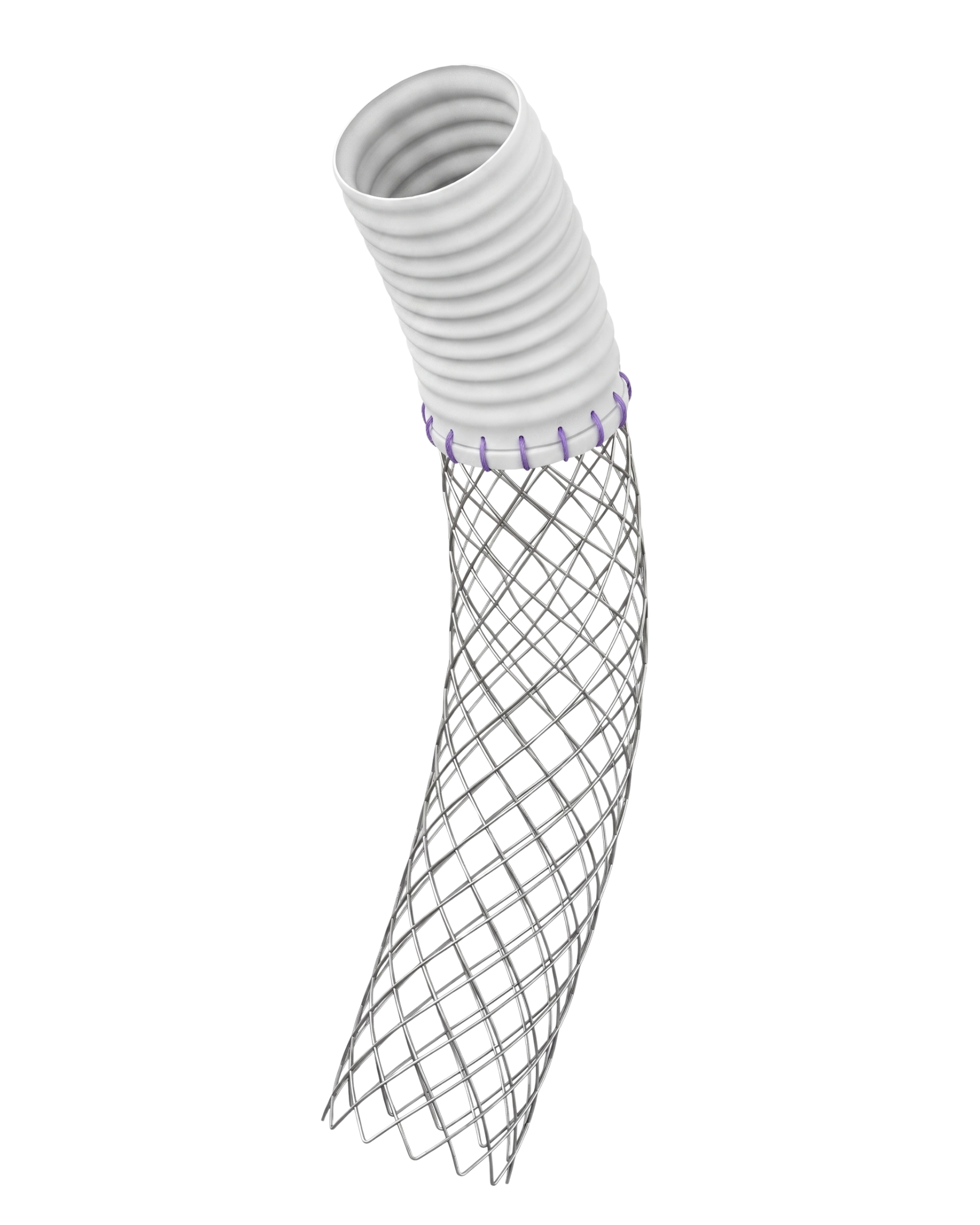
He arrived with a clear clinical vision and a detailed sketch of the implant he wanted to place in the artery. What he did not have was a way to build it. The concept covered only the implant side. There was no delivery mechanism, no fully documented engineering specifications, and no quality system to support development. At the outset, the company was effectively one person: the surgeon himself, working alongside his clinical practice.
He needed a partner who could take a clinical idea and carry it all the way to a manufacturable, testable, regulatory-ready device. As the program matured, he added a technical and engineering resource to support the work. He chose to work with Aptyx because of our depth in complex device design, our established quality system and design controls, and our ability to serve as a true end-to-end development partner rather than a build-to-print supplier.
Solution
Aptyx began by translating the surgeon’s clinical experience into documented user needs. Working directly with him, our team converted his knowledge into objective, measurable specifications: how strong the device needed to be, the range of arterial sizes it had to fit, the implant length and diameter required, and how it would be deployed. Because the customer had no quality system of its own in the early phases, the program ran under Aptyx design controls, giving the effort the structure and traceability that regulatory submissions would later require.
From there, we co-developed both the implant and a novel delivery system from the ground up. The delivery system was, in some ways, the harder problem. The surgeon knew precisely what he wanted implanted but not how to deliver it, and the implant’s unique deployment made a traditional approach (e.g.. push/pull mechanism) impractical. Our team iterated through prototyping to a frozen design, then built and managed the test protocols, verification, and testing needed to support regulatory filings, including outsourced testing where appropriate.
The partnership itself was a factor in the outcome. Rather than handing off requirements and standing by, the surgeon stayed engaged throughout. He could explain the clinical reasoning behind each request to engineers and technicians alike, and he was present in a way that reinforced why the details mattered without dictating the solution. That two-way collaboration kept the technical work anchored to real clinical needs.
Aptyx supported the regulatory strategy as well as the build. The program pursued approval outside the United States first, generating a clinical evidence base that would go on to strengthen the U.S. regulatory path. We supported submissions and clinical trial execution across markets, and continued as the manufacturing partner after the company was acquired by a larger medical device company. That relationship remains active today, extending to additional, separate programs with the acquiring company.
Results
What began as a napkin sketch from a single surgeon became a commercial success on three continents, developed and manufactured with Aptyx at every stage.
| First regulatory approval achieved within three years of program start |
▪ Achieved first regulatory approval outside the United States within three years of program start, followed closely by CE Mark approval in Europe and commercial launch
▪ Subsequently granted FDA Breakthrough Device Designation to accelerate U.S. clinical development
▪ Acquired by a global medical device company, with Aptyx continuing as the manufacturing partner through and beyond the transaction
▪ Later received an FDA Humanitarian Device Exemption, the device’s first U.S. marketing authorization
▪ Ultimately achieved full FDA premarket approval (PMA), supported by clinical data showing significant reductions in mortality and complications versus the standard of care, with durability confirmed at two-year follow-up
▪ Aptyx remains the manufacturing partner today and supports the acquiring company on additional programs
For physician-inventors and early-stage companies, this program shows what an end-to-end development partnership can deliver: a clinical idea translated into a validated design, carried through global regulatory approvals, and sustained into commercial manufacturing over more than a decade of partnership.