

Blog
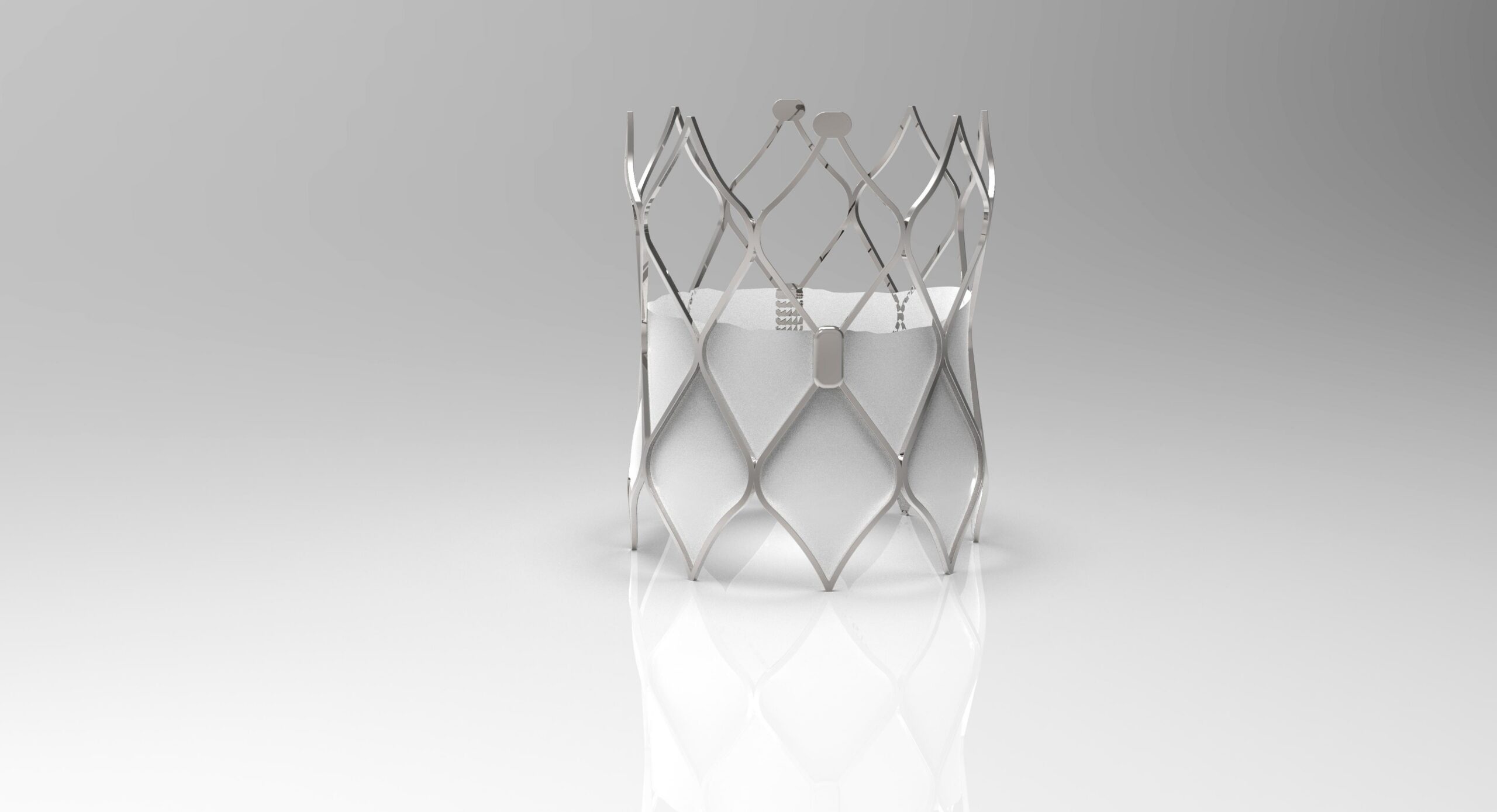
The material decision in a structural heart device gets made early, often before the design is fully settled, and it quietly sets the ceiling on everything that follows: delivery profile, how the device tracks and deploys, how tissue responds to it, and how wellit holds up under cyclic load. For a growing share of transcatheter valves, occluders, and covered frames, that decision lands on expanded polytetrafluoroethylene (ePTFE). It is worth understanding why the material keeps winning, and what committing to it actually locks in, before it is designed into the device.
Why ePTFE earns its place.
Start with the base polymer. PTFE has a set of properties that come straight from its molecular structure: low surface energy, which gives it both slipperiness and biocompatibility; the highest chemical resistance of any organic polymer; and stability across a wide temperature range. Those traits alone make it useful. Expansion is what makes it interesting for implants.
Stretching PTFE under heat introduces porosity and aligns the polymer chains. The result is stronger than the material it started as and, less obviously, more flexible, with permeability that can be controlled rather than simply accepted. For a structural heart engineer, that resolves into three things you can design around: a low enough profile for transcatheter delivery, strength you can bias in chosen directions, and control over how much the device endothelializes once implanted.
Against the other implant materials in common use, that combination is hard to match. Tissue has the longest clinical history but brings sourcing and consistency questions. Polyester performs well in vascular grafts and costs less, but ePTFE carries the same core strengths and adds low profile, resistance to dilation, and endothelialization control.
| Property | Polyester | ePTFE |
| Durability | ✓ | ✓ |
| Flexibility | ✓ | ✓ |
| Strong tensile strength | ✓ | ✓ |
| Biocompatibility | ✓ | ✓ |
| Low profile | ✓ | |
| Endothelialization control | ✓ | |
| Modifiable | ✓ | |
| Resists dilation | ✓ | |
| Lower cost | ✓ |
Form follows the device.
ePTFE does not have a single material structure. It comes as membrane, tube, flat sheet, and fiber, and the form is selected for the device rather than the other way around.
For structural heart work, flat sheet is often the starting point, because it carries high mechanical strength and suits leaflets and patches where load matters. Membrane is the choice for complex, ultra-thin geometries, which is where occluders and covered frames tend to live. Fiber appears as ePTFE suture, used to sew the material onto a frame. Tubular forms serve graft-like geometries where flexibility is the priority.
| Form | Structural heart application | Why it fits |
| Flat sheet | Leaflets, patches | High mechanical strength; benefits from flat sheet technology |
| Membrane | Occluders, covered frames | Ultra-thin; conforms to complex geometry |
| Fiber | Attachment to frames | Sewn onto frames as ePTFE suture |
| Tubular | Graft-like geometries | High flexibility |
For an early-stage program, the takeaway is that form is a design input, not a downstream detail. A leaflet, an occluder membrane, and a suture-attached cover are three different manufacturing problems even when they share the same base material.
What is tunable, and what that commits you to.
Much of ePTFE’s behavior is set during processing, not adjusted after the fact. Whether the material is stretched in one direction, common in grafts, or expanded transversely into a biaxial membrane changes how its strength is distributed and how porous it is. Expansion ratios can be run fully or partially depending on the property you want in the finished device. Layering adds another axis, and bioactive additions such as heparin or carbon, or a component like FEP or urethane, let the material meet specific therapeutic or thrombogenicity targets.
The thinness is real, and it matters here. Aptyx has worked with ePTFE at one ten-thousandth of an inch, set against a human hair at roughly six thousandths. That headroom is a large part of why the material supports the low-profile, less-invasive devices the field keeps moving toward.
Here is the honest part.
All of that modifiability means many interacting variables to control at once. The same freedom that lets you dial in porosity, orientation, layering, and additives is the reason ePTFE rewards experience and punishes guesswork.
The decision you are actually making.
Choosing ePTFE is closer to choosing a device architecture, and you are choosing it before you have all your data. Get the form, porosity, and layering right early and you set a high ceiling for the program. Get them wrong and you tend to find out during testing, when changes are expensive.
It helps to know where a manufacturing partner fits. Aptyx does not make raw ePTFE. It specifies resins directly, works with raw-material suppliers on drawdown, shear, and expansion ratios, and converts membrane, tube, sheet, and fiber into finished implants and devices, with ePTFE lamination handled in house. For a structural heart team, that means the material can be tuned to the device from the resin up rather than bought off a shelf and worked around.
If you are selecting or pressure-testing an ePTFE-based design and want the material and form decisions to be right while they are still cheap to change, start the conversation with Aptyx engineering. For a fuller treatment of the material, its forms, and the risks worth mitigating, our experts go deeper in The Promise of ePTFE.