

Blog
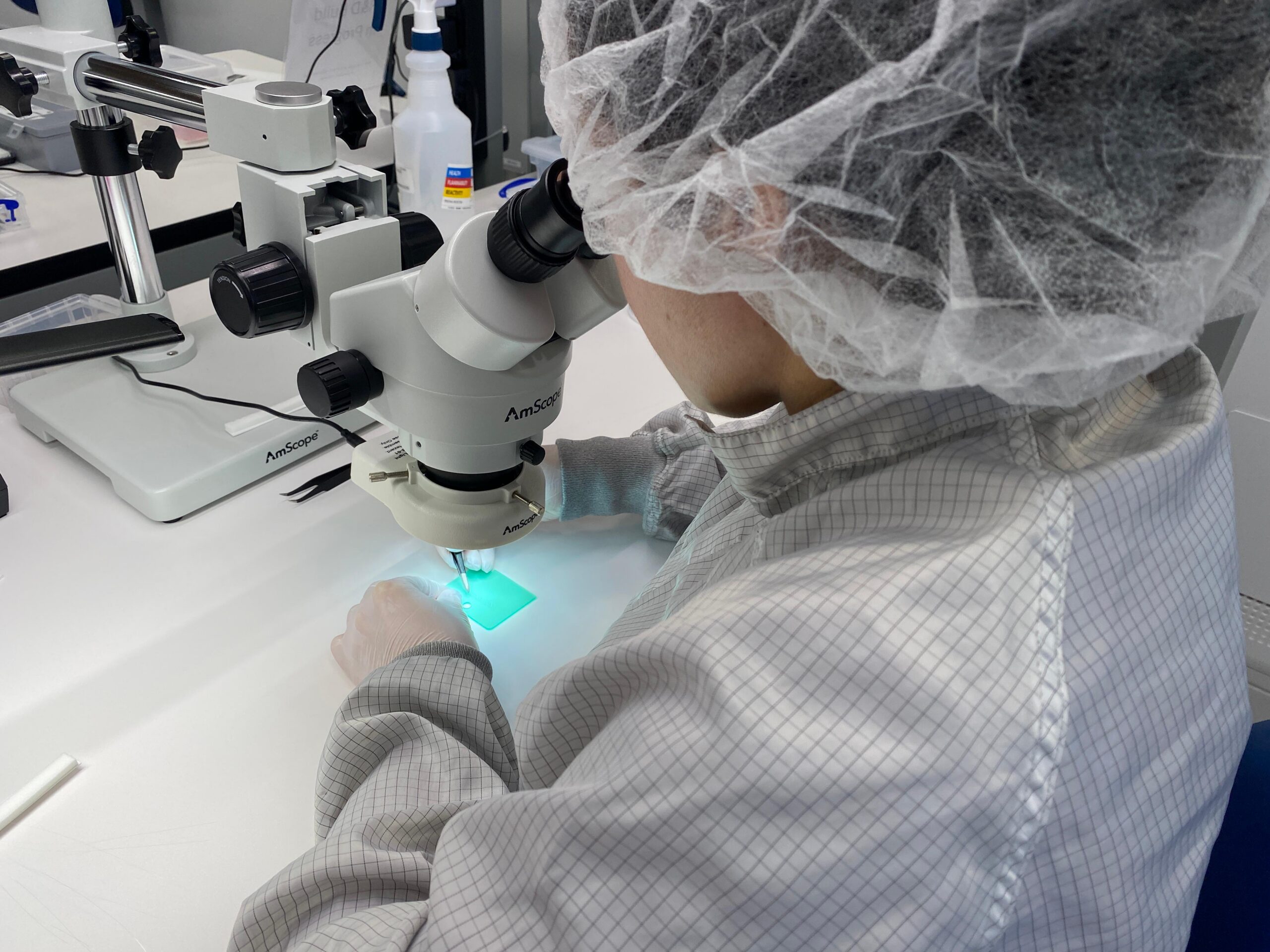
Most program transfers don’t fail because the engineering was bad. They fail because of assumptions nobody questioned until the team was already three months behind schedule.
“We have a complete design package” and “we’re making parts that pass IQ/OQ/PQ at a new site” sound like they should be a few weeks apart. They’re not. For companies transferring device programs into the United States, whether from Europe, Asia, or another domestic manufacturer, the distance between those two milestones is measured in months of regulatory work, supplier requalification, process revalidation, and hard conversations about what the sending site’s documentation actually contains versus what the receiving site needs.
Below: the specific operational, regulatory, and execution risks that surface during a U.S. program transfer, and what you can do to get ahead of them.
Why programs transfer in the first place.
Companies move manufacturing for a handful of practical reasons. Some are strategic, some are reactive, and most involve at least one timeline that someone has already committed to externally.
The most common drivers right now: geographic de-risking after COVID-era supply chain failures, onshoring to reduce dependency on single-region manufacturing, scaling from pilot volumes to commercial production at a site with more capacity, and regulatory strategy. That last one is increasingly common with European OEMs that want an FDA-registered, U.S.-based manufacturing site for their cleared or approved devices. Having U.S.-based production simplifies FDA interactions, reduces lead times into the domestic market, and gives the company a localized supply chain that doesn’t depend on international freight windows.
Others transfer because they’ve outgrown their current supplier. The CDMO that helped develop the first 500 units may not have the cleanroom capacity, automation infrastructure, or quality system maturity to support 50,000 units a year. That’s not a failure on either side. It’s the natural lifecycle of a device program.
Regardless of the reason, the transfer itself follows the same arc. And the same things tend to break.
The design package gap.
Every transfer starts with a document exchange. The sending site provides a design package. The receiving site reviews it and builds a plan. Simple enough in theory.
In practice, what companies call a “complete” design package and what a receiving CDMO actually needs to stand up production are rarely the same thing. This gap is the single most common source of delay in program transfers, and it shows up within the first 30 days of every project.
Here’s what typically happens. The sending site provides a bill of materials, a set of part drawings, and a collection of manufacturing instructions or work instructions. That package may be perfectly adequate for the site that created it, because that site has institutional knowledge embedded in its operators, its equipment, and its process history. The receiving site has none of that. This is why communication and physically visiting the site to learn the full production process is critical. This lowers the barrier of understanding this institutional knowledge for the receiving CDMO.
A BOM with part numbers but no approved supplier list forces the new site to reverse-engineer the supply chain. Drawings without complete GD&T callouts leave the receiving engineers guessing at functional dimensions versus reference dimensions. Work instructions written for specific equipment models (a particular injection press, a particular extrusion line) may not translate to the receiving site’s equipment without significant adaptation.
The most overlooked element is the process history. What parameter adjustments were made during development? What failure modes surfaced during initial validation and how were they resolved? What incoming material variations triggered yield issues? This knowledge rarely lives in formal documents. It lives in the heads of the people who built the process, and it walks out the door when the program leaves.
What a complete transfer package should include.
✓ Bill of materials with approved suppliers, alternates, and material certifications
✓ Part drawings with full GD&T, critical-to-quality (CTQ) dimensions identified
✓ Design history file (DHF), including design inputs, outputs, verification, and validation records
✓ Device master record (DMR), current revision
✓ Manufacturing instructions tied to process, not to specific equipment serial numbers
✓ Process validation protocols and reports (IQ/OQ/PQ) from the sending site
✓ Incoming inspection specifications for all purchased components and raw materials
✓ Risk management file (per ISO 14971), including current risk assessments
✓ Packaging and labeling specifications with sterilization parameters (if applicable)
✓ Complaint history and CAPA records relevant to the transferred product
✓ Any tooling specifications, maintenance records, and shot count history (for molded components)
If more than two items on this list are missing or incomplete when the transfer begins, expect timeline extensions. Plan for them rather than hoping they won’t materialize.
Regulatory and quality system alignment.
Regulatory requirements for a manufacturing site change depend almost entirely on how the device was originally cleared or approved, and whether the transfer involves a change of ownership, a change of manufacturing site, or both.
For devices cleared through the 510(k) pathway, a manufacturing site change typically does not require a new 510(k) submission, provided the device itself hasn’t been modified in ways that affect safety or effectiveness. The new manufacturer does need to register the facility with the FDA and list the device. And the new site’s quality system needs to be inspection-ready under 21 CFR Part 820.
For PMA-approved devices, the rules are stricter. A change in manufacturing site requires a PMA Manufacturing Site Change Supplement under 21 CFR 814.39(a)(3). This is a formal submission to FDA, and the agency may conduct a pre-approval inspection of the new facility before granting approval. The timeline for this review varies, but companies should assume 4 to 6 months minimum from submission to approval. Planning production ramp-up before this approval is in hand is a gamble that rarely pays off.
Beyond the regulatory submission itself, there’s a layer of quality system alignment that’s less visible but equally time-consuming. Two ISO 13485-certified facilities can have meaningfully different interpretations of the same clauses. Document control conventions differ. Training qualification processes differ. Incoming inspection sampling plans may use different AQL levels for the same components. Supplier qualification procedures at the sending site may not satisfy the receiving site’s approved supplier requirements, which means raw materials that were qualified at the old site need to go through a full supplier qualification cycle at the new one.
| Transfer scenario | Regulatory action required |
|---|---|
| 510(k) device, same company, new U.S. site | FDA facility registration + device listing. No new 510(k) required unless device is modified. QSR inspection readiness. |
| 510(k) device, new company (ownership transfer) | Transfer of 510(k) ownership documentation. New facility registration + device listing. QSR inspection readiness. |
| PMA device, same company, new U.S. site | PMA Site Change Supplement (21 CFR 814.39(a)(3)). Possible FDA pre-approval inspection. |
| PMA device, new company (ownership transfer) | PMA ownership transfer + site change supplement. New PMA number issued to new owner. Pre-approval inspection likely. |
| EU MDR device entering U.S. market for first time | Full 510(k) or PMA submission required (not a “transfer” in FDA terms, but a new market entry). U.S. Agent designation required for foreign manufacturers. |
One scenario that trips up European companies in particular: transferring a CE-marked device to a U.S. manufacturing site does not carry the CE mark forward. The U.S. site must have its own quality system certification, and the product must go through the appropriate FDA premarket pathway independently. CE marking and FDA clearance are entirely separate regulatory regimes with separate evidence requirements.
Process validation: you can’t copy-paste an IQ/OQ/PQ.
This is where transfer timelines go sideways most often.
Companies sometimes assume that because a process was validated at the sending site, the same process parameters will produce equivalent results at the receiving site. That assumption underestimates how many variables change in a transfer: different equipment models, different environmental conditions, different incoming material lots, different operators.
Process validation under 21 CFR 820.75 (and ISO 13485 Clause 7.5.6) requires demonstrated evidence that the process, as implemented at the specific site with the specific equipment and personnel, consistently produces output meeting predetermined specifications. The key phrase is “as implemented at the specific site.” Validation from a different site, on different equipment, is reference data. It’s useful for protocol design, but it doesn’t satisfy the regulatory requirement.
What this means practically: every validated process in the transferred program needs revalidation at the receiving site. IQ confirms the equipment is installed correctly and meets specifications. OQ confirms the process operates within defined parameters. PQ confirms the process produces conforming product under production conditions across a statistically meaningful number of runs.
For injection molded components, this includes confirming that transferred tooling produces equivalent parts on the receiving site’s presses. Mold steel condition matters. A tool with 500,000 shots on it will not perform identically to when it was new, and cavity wear patterns will be different from what the original validation data reflects. SPI mold classification (Class 101 through Class 105) sets expectations for shot life, but the actual state of the steel needs physical assessment before process validation begins.
For extruded components, line qualification at the receiving site involves confirming that the die, downstream equipment, and inline measurement systems produce equivalent dimensional output. Extrusion is particularly sensitive to environmental factors (ambient temperature, humidity) and material lot-to-lot variation. A process that runs consistently in a climate-controlled facility in Germany may behave differently in a facility in the southeastern U.S. without equivalent HVAC controls.
Finished goods and secondary processes carry their own transfer risk, and it’s often underestimated relative to molding and extrusion.
For implants, processes like split die bonding, manual suturing, and stent crimping are far more operator-dependent than molding or extrusion. Bonding fixture geometry and cure profile need their own revalidation, not just the equipment. Suture technique needs documented standards and Gauge R&R on the inspection method, since a pattern that passes at the sending site isn’t automatically reproducible by new operators. Crimping needs revalidated crimp profile, dwell time, and recovery diameter, since small differences in crimping head geometry or speed can affect deployment force and radial strength.
Catheter and delivery system secondary processes carry the same risk. Reflow bonding is sensitive to heat shrink tension, mandrel material, and temperature profile. Braiding and coiling depend on pic count, braid angle, and wire tension. None of these transfer as a static recipe. All of them need trials at the receiving site, plus documented operator qualification, since these processes lean more manual and more operator-dependent than primary molding or extrusion.
Validation is not a document transfer. It’s a manufacturing proof. You can transfer protocols. You can transfer institutional knowledge. But the actual evidence that the process works at the new site has to be generated at the new site, on the new equipment, with the new operators.
Supply chain continuity and the hidden timeline killers.
Program transfers have a supply chain layer that often doesn’t get the attention it deserves until it’s on the critical path.
Start with raw materials. The sending site may have qualified specific material lots from specific suppliers under specific incoming inspection protocols. The receiving site’s approved supplier list may not include those same suppliers. Even if it does, the receiving site’s quality system may require its own incoming inspection validation, its own material certifications, and its own first-article inspection against the component drawing.
For single-source components, this is a particular risk. If there’s only one supplier for a critical raw material or purchased component, and that supplier’s qualification at the sending site can’t be leveraged at the receiving site, the entire transfer timeline now depends on how quickly the receiving site can qualify that supplier through its own procedures.
Then there’s the timeline stacking problem. In a transfer, multiple workstreams converge on the same window: tooling transit and inspection, equipment installation and IQ, material qualification, operator training, cleanroom qualification (if the product requires ISO Class 7 or Class 8 environments), sterilization adoption, and pilot production runs. Each of these has its own lead time, and they’re often interdependent. You can’t run pilot production without trained operators. You can’t train operators without qualified materials. You can’t qualify materials without approved suppliers. The more steps along the production line, the more these interdependencies become critical to the project timeline.
Timeline risk factors in program transfers.
| Risk factor | Typical lead time | Dependencies |
|---|---|---|
| Tooling transit, inspection, and refurbishment | 4-8 weeks | Steel condition assessment, logistics, customs (if international) |
| Equipment installation + IQ | 2-6 weeks | Facility readiness, utility connections, calibration |
| Raw material supplier qualification | 6-12 weeks | Supplier audit, first-article inspection, incoming spec development |
| Operator training and qualification | 4-8 weeks | SOP development, equipment availability, documented competency assessment |
| Cleanroom qualification (if applicable) | 4-8 weeks | HVAC commissioning, particle count validation, gowning protocol |
| Process OQ/PQ | 4-12 weeks | All of the above must be complete first |
| Pilot production and PPQ | 4-8 weeks | OQ/PQ complete, packaging validation, labeling approval |
The total critical path for a moderately complex program transfer typically runs 6 to 12 months from contract execution to first production shipment. Complex programs with PMA devices, multiple validated processes, and international logistics can extend to 12 to 18 months.
Companies that build realistic Gantt charts based on these lead times, rather than aspirational timelines based on what the business wants, avoid the most common transfer failure: running out of product from the old site before the new site is qualified to ship.
What to look for in a receiving CDMO.
Not every contract manufacturer is equipped to receive a transferred program. The capability to build a device from scratch and the capability to receive someone else’s validated process and replicate it under a different quality system are related but distinct competencies.
When evaluating a receiving CDMO, the engineering depth matters more than the sales pitch. Can their engineering team review your design package, identify manufacturability risks, and flag gaps in documentation before the transfer begins? Or will those gaps surface during validation, when the cost of discovery is 10x higher?
Quality system maturity is the other gating factor. A CDMO with deep transfer experience will have a documented technology transfer procedure: a defined process for how they receive, review, and integrate an incoming program into their quality system. If they don’t have one, that’s a signal.
Questions to ask a CDMO before committing to a program transfer.
✓ Do you have a documented technology transfer process? Can we review it?
✓ How many program transfers have you completed in the last 24 months? What device classes?
✓ What’s your standard timeline from contract execution to first production shipment for a transfer of comparable complexity?
✓ How do you handle gaps in the incoming design package? At what point do you escalate versus work around?
✓ What’s your approach to supplier qualification for materials currently sourced by the sending site?
✓ Do you have in-house tooling capabilities for inspection, refurbishment, and qualification of transferred molds?
✓ What cleanroom classifications are available, and what’s your current capacity utilization?
✓ Can you support the full scope of the transfer in-house (molding, extrusion, assembly, packaging), or will subcontractors be involved?
✓ If this is a PMA device, have you supported PMA site change supplement submissions before?
✓ Who will be the dedicated project engineer or program manager assigned to this transfer?
The difference between a CDMO that can manufacture your device and one that can receive your program, integrate it into their operations, and deliver equivalent quality output from day one is the difference between a vendor and a partner. The questions above help separate the two.
Making the transfer stick.
The most successful transfers share a common pattern: early, sustained, in-person collaboration between the sending and receiving teams.
Document transfers and video calls can cover the technical specifications, but they can’t transfer the institutional knowledge that makes a process actually work. Multi-day on-site sessions, where engineers from both sides walk through the process together, handle the tooling, review the actual failure modes, and build the validation protocols collaboratively, compress the learning curve in ways that remote communication simply can’t replicate.
Phased transfers also outperform big-bang approaches, but the sequencing matters. Rather than leading with the highest-risk or most complex subassembly, start with lower-risk items. Use them to establish a working rhythm between the sending and receiving teams: how issues get escalated, how documentation gets reviewed, how decisions get made under time pressure. That rhythm is worth building before the program is under real pressure to perform. Once the team has a track record of working well together, move to the more complex, higher-risk subassemblies. This isn’t about saving the hardest problems for last. It’s about not tackling them with a team that hasn’t yet learned how to work together.
Set realistic timelines from the start. The business may want product from the new site in 90 days. The engineering reality for a validated medical device program is closer to 6 to 12 months. Aligning expectations early, with data (not optimism) driving the schedule, prevents the downstream chaos of compressed timelines forcing shortcuts in validation or quality system integration.
At Aptyx, our global network of more than 10 manufacturing locations and dedicated Interventional Systems division in Charlotte were built to handle exactly this kind of complexity. From injection molding and custom extrusion to cleanroom assembly and full device integration, the infrastructure to receive, validate, and scale transferred programs is in place, backed by ISO 13485 certification, FDA-registered facilities, and engineering teams who have done this before.
If you’re evaluating a program transfer to a U.S.-based manufacturer and want to understand what the timeline and scope actually looks like for your specific device, talk to Aptyx engineering.